
Sight
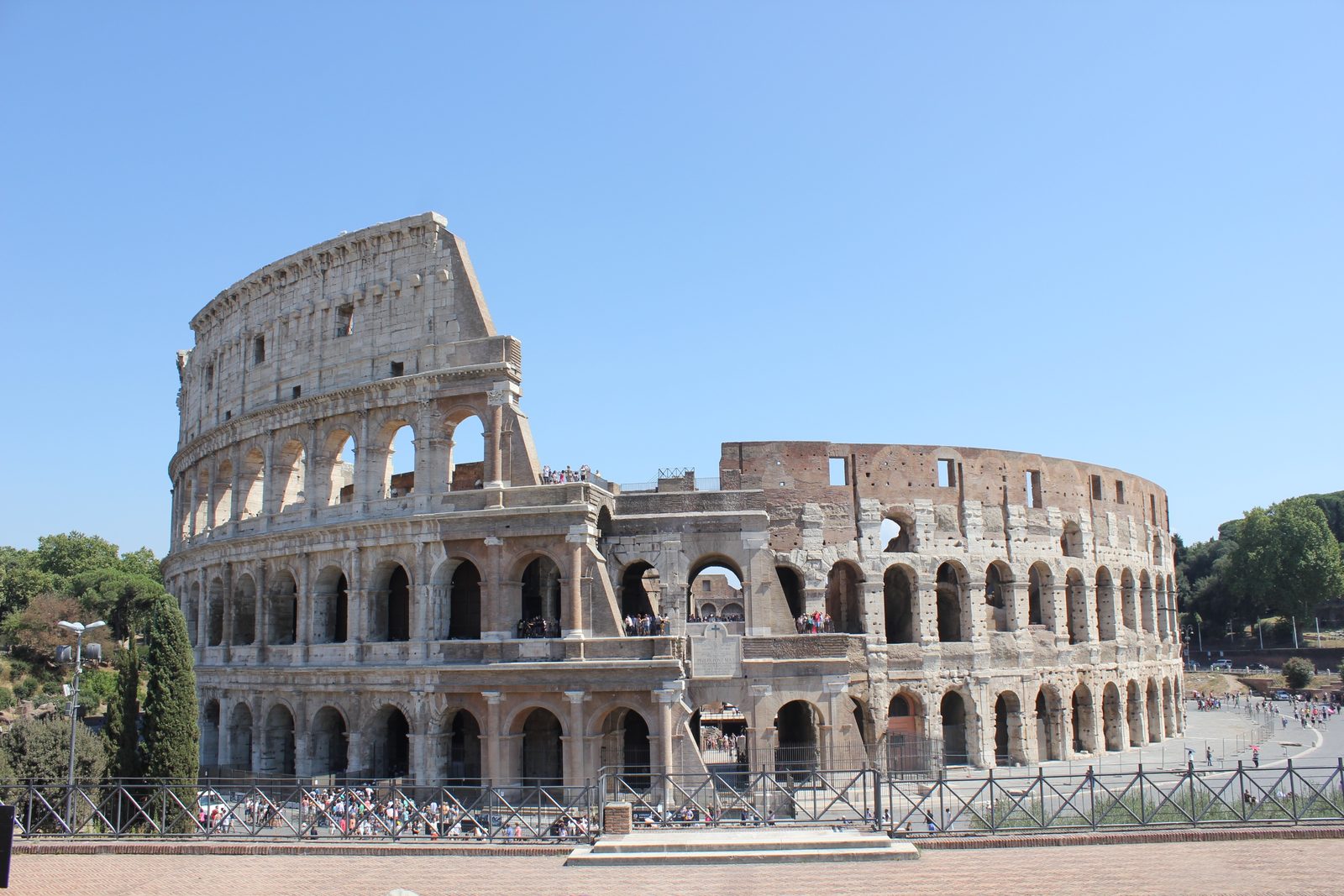
Colosseum, Rome
The great amphitheatre of ancient Rome. Book the earliest slot you can: entry to the Colosseum is timed, and the same ticket covers the Forum and the Palatine afterwards.
Three days is the length most first visits to Rome are planned around, and it is enough if each day stays in one part of the city and the booked visits are put where they fit. This plan starts with the Colosseum and the Forum and walks up into Monti for the evening. The second day pairs a morning at the Vatican with a late-afternoon slot at the Galleria Borghese, joined by one metro ride. The last day has almost nothing to book: Trastevere in the quiet of the morning, then the market square, the Pantheon and the Trevi Fountain.
Updated November 2026
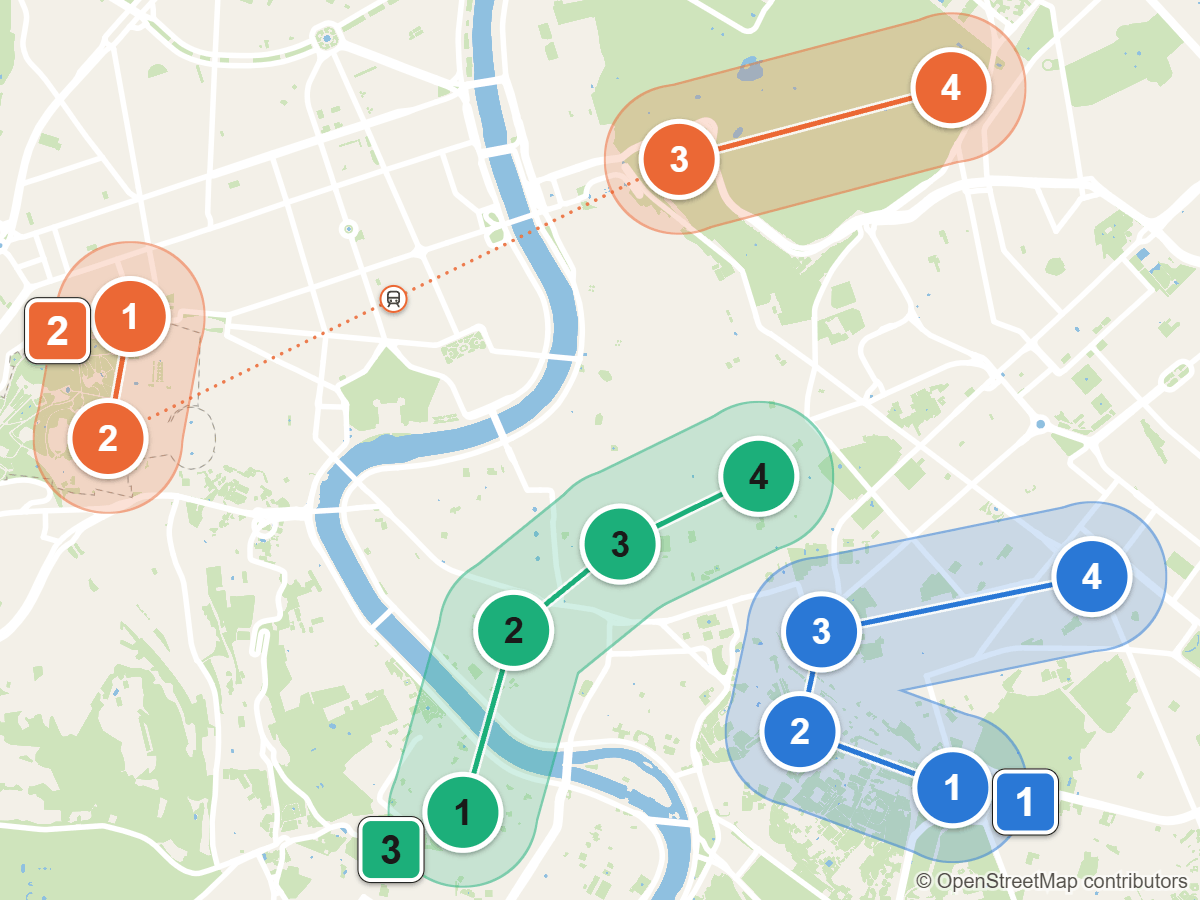
Solid line: on foot · Dotted line: a ride (train, bus, boat or taxi) · Each day's stops are numbered from 1.
Map data © OpenStreetMap contributors
Why this orderTake an early Colosseum slot: the ticket gives one timed entry to the amphitheatre and one entry to the Roman Forum and the Palatine, so walk straight on into the Forum and up the hill of the emperors' palaces. Leave by Via dei Fori Imperiali for Trajan's Markets, where the museum of the Imperial Fora fills the emperor's terraced complex of shops and offices. Then climb through the lanes of Monti to Santa Maria Maggiore and stay in Monti for dinner.
Getting aroundOn foot all day. Trajan's Markets is about ten minutes' walk from the Forum's exit on Via dei Fori Imperiali, and Santa Maria Maggiore is about 20 minutes on foot from there, through Monti.
The great amphitheatre of ancient Rome. Book the earliest slot you can: entry to the Colosseum is timed, and the same ticket covers the Forum and the Palatine afterwards.
The ruined centre of ancient Rome's public life and, above it, the hill where the emperors built their palaces. One connected site; give it at least the rest of the morning.
Trajan's complex of shops, warehouses and offices, built on six levels against the slope of the Quirinal in the early second century. The museum inside rebuilds the decoration of the Imperial Fora from original fragments.
One of Rome's four papal basilicas, free to enter, with nave mosaics from the fifth century. Bernini is buried here in a plain family tomb, and Pope Francis was laid to rest here in 2025.
For a shorter day: Skip Trajan's Markets and stop at San Pietro in Vincoli on the way up to Monti, a free church where Michelangelo's Moses sits on the unfinished tomb of Pope Julius II.
Why this orderTwo booked visits shape the day. Take the first Vatican Museums slot you can get, and walk round to St Peter's Basilica afterwards: it is free, and shoulders and knees must be covered. Cross the city on the metro to Piazza del Popolo and climb to the Pincio terrace, the best free view of the trip, with St Peter's dome on the horizon. Then walk on through the Villa Borghese gardens to the Galleria Borghese for a late-afternoon slot.
Getting aroundOn foot from the Vatican Museums round to St Peter's. Then metro line A from Ottaviano to Flaminio, by Piazza del Popolo. From there on foot: up the ramps to the Pincio terrace, then through the Villa Borghese gardens to the Galleria Borghese, about half an hour.
The popes' collections, with the Sistine Chapel near the end of the route. Book on the museums' official site, and expect to spend most of the morning.
The basilica is free to enter, with Michelangelo's Pietà inside. The dress code is enforced at the door; the dome climb has its own ticket.
A terrace laid out by Giuseppe Valadier in the 19th century, above Piazza del Popolo, with the rooftops of the centre and St Peter's dome beyond. Free, and the easiest place on this route to sit and look.
A cardinal's villa in the park, filled with Bernini's marble groups and paintings by Caravaggio and Titian. Every visitor must book a slot, and the visit is limited in time, so arrive a little early.
If the Borghese is sold out: Visit Palazzo Barberini instead, by the Barberini stop on the same metro line, home of Caravaggio's Judith Beheading Holofernes and Raphael's La Fornarina.
Why this orderThe last day has nothing that needs booking ahead. Start in Trastevere while its lanes are still quiet, inside Santa Maria in Trastevere for the gold mosaics of its apse. Cross the river on the Ponte Sisto to Campo de' Fiori while the morning market is up. Walk on through Piazza Navona to the Pantheon, and end at the Trevi Fountain, which is free to see from the square at any hour.
Getting aroundOn foot all day. Santa Maria in Trastevere to Campo de' Fiori, over the Ponte Sisto, is about 15 minutes. Campo de' Fiori to the Pantheon, through Piazza Navona, is about 10 minutes, and the Pantheon to the Trevi Fountain about 10 more.
One of the oldest churches in Rome, free to enter, with a 12th-century apse mosaic of Christ and the Virgin enthroned and Pietro Cavallini's scenes of the life of the Virgin below it.
A square with a morning market of produce and flowers, around the hooded statue of Giordano Bruno, burned here for heresy in 1600.
The Roman temple rebuilt under Hadrian, a church since the seventh century, with Raphael's tomb inside. Entry needs a ticket, sold online or at the door.
Rome's most famous fountain, filling a small square almost wall to wall. Seeing it from the square is free; the steps down by the basin have a ticket during the day.
If it rains: Trade Campo de' Fiori for the Galleria Spada next to it, a palace collection with Borromini's perspective gallery, a short colonnade built to look several times longer than it is.
They change by place and season, and several museums and churches close one day a week or in the middle of the day. Check each place before you go, and book a time slot wherever one is offered.
The Colosseum (one timed entry to the amphitheatre plus one entry to the Forum and Palatine), the Vatican Museums (on the official site) and the Galleria Borghese, where booking is required for every visitor. The Pantheon ticket can be bought online or at the door. St Peter's, Santa Maria Maggiore and Santa Maria in Trastevere need no ticket.
The metro, buses and trams accept contactless bank cards and phones at the gate or on board; paper tickets must be validated when you start. The Leonardo Express train from Fiumicino airport to Roma Termini needs its own ticket.
St Peter's and the Vatican Museums require covered shoulders and knees, and large bags are not allowed in the museums. Churches across the city expect the same.
Monti or the streets around the Pantheon keep Days 1 and 3 on foot and put the Vatican a single metro line away.
Enough for the Colosseum, the Vatican and the old centre at a comfortable pace, if each day stays in one area. It is not enough to add a day trip without dropping a day of this plan.
The Colosseum, the Vatican Museums and the Galleria Borghese. Book the Vatican and the Borghese on the same day only if you can get an early slot for the first and a late-afternoon slot for the second.
Seeing it from the square is free at any hour. Since 2026, the area down the steps by the water has a ticket during the day.
Day 3 walks through Piazza Navona on the way to the Pantheon. The Spanish Steps are about 10 minutes on foot from the Trevi Fountain, an easy extra for the last evening; sitting on the steps is not allowed.
Its lanes are calm early, and starting there puts you at Campo de' Fiori while the market is still running, instead of crossing the river twice.
Place names from Google Maps.
Copy this plan into your own trip notebook. Change anything, add dates later, and invite the people you are travelling with.
Use this plan
By continuing, you agree to the Terms of Service and acknowledge the Privacy Policy.