
Palais Garnier
The opera house completed in 1875, open for self-guided visits outside performances; visits must be booked online. The grand staircase is the highlight; rehearsals sometimes close the auditorium, with its ceiling painted by Chagall.
One week is enough to see two sides of France if you stop trying to see all of it. This plan gives Paris two full days, one on the Right Bank and one along the Seine, then takes the high-speed train south to Avignon. From there, five days of Provence run on regional trains and buses: the papal city itself, the Roman aqueduct at the Pont du Gard and the temples of Nîmes, Arles, Saint-Rémy and its Van Gogh sites, and a last calm morning across the river in Villeneuve-lès-Avignon. You sleep in only two places, and you never need a car.
Updated November 2026
Paris → Avignon → Nîmes → Arles → Saint-Rémy-de-Provence → Villeneuve-lès-Avignon
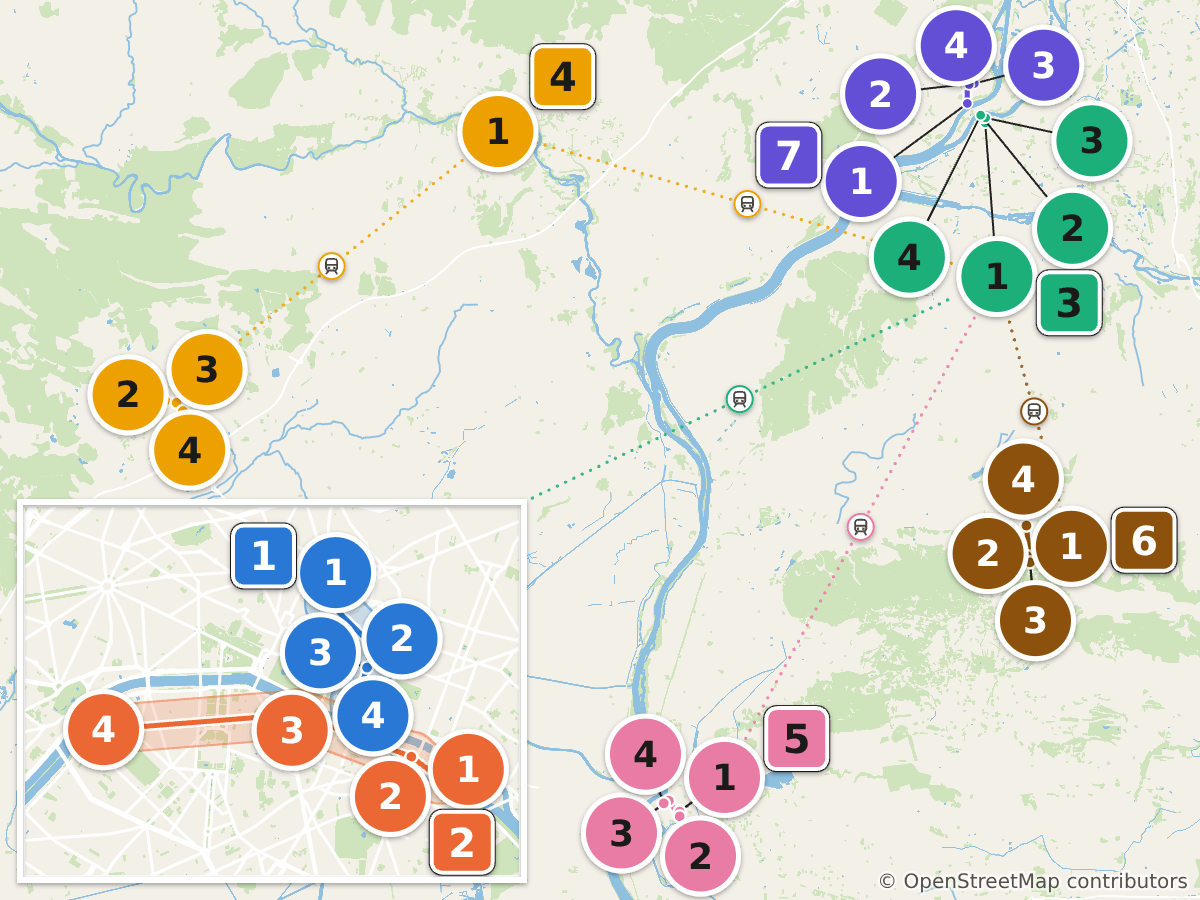
Solid line: on foot · Dotted line: a ride (train, bus, boat or taxi) · Each day's stops are numbered from 1.
Map data © OpenStreetMap contributors
Why this orderOpen the day inside the Palais Garnier, the opera house, on a booked self-guided visit, and climb its grand staircase. Then walk south, downhill towards the river, through the Galerie Vivienne, a covered 19th-century arcade, and out into the Palais-Royal garden for a quiet lunch. Keep the Louvre for an afternoon time slot as the day's one big visit, and pick two or three collections rather than the whole museum. Each stop is a short walk from the last, and most of the day is under a roof.
Getting aroundOn foot all day. The Palais Garnier to the Louvre, through the Galerie Vivienne and the Palais-Royal, is about half an hour on foot without stops.
The opera house completed in 1875, open for self-guided visits outside performances; visits must be booked online. The grand staircase is the highlight; rehearsals sometimes close the auditorium, with its ceiling painted by Chagall.
A covered shopping arcade from the 1820s, with a mosaic floor and a glass roof, a few steps from the Palais-Royal. Free to walk through.
A quiet walled garden behind the Palais-Royal, framed by arcades, with the striped Buren columns in the courtyard at its southern end. A good place to sit before the museum.
A public museum since 1793, inside the palace of the French kings, and now the most visited in the world. Every visitor books a time slot; here it is the afternoon's single big visit, so choose your collections in advance and let the rest go.
If it rains: Skip the open garden and walk through the Palais-Royal's covered arcades instead, from the Galerie Vivienne straight to the Louvre.
Why this orderBegin at Notre-Dame as it opens, then cross to Sainte-Chapelle for a booked late-morning slot. Walk west along the river to the Musée d'Orsay for the afternoon, with its Impressionist collection in a former railway station, and finish at the Eiffel Tower in the evening, booked ahead, so your last night in Paris ends with the lights.
Getting aroundOn foot along the Seine: Sainte-Chapelle to the Musée d'Orsay is under half an hour. For the tower, walk on along the river or take the RER C from Musée d'Orsay to Champ de Mars–Tour Eiffel.
The medieval cathedral of the Île de la Cité, open to visitors again since December 2024 after the fire of 2019. No ticket is needed; reserving one of the free time slots is optional and can shorten the line.
A 13th-century royal chapel whose upper level is almost all stained glass. Every visitor books a time slot.
A grand riverside railway station turned museum, home of the world's largest collection of Impressionist and Post-Impressionist masterpieces. Book a time slot.
The wrought-iron tower Gustave Eiffel's company put up for the 1889 World's Fair. Go up on a booked time, above all for the summit, and stay for the evening: after nightfall it sparkles for five minutes on the hour.
If it rains: Skip the riverside walk and take the RER C from Musée d'Orsay to Champ de Mars–Tour Eiffel.
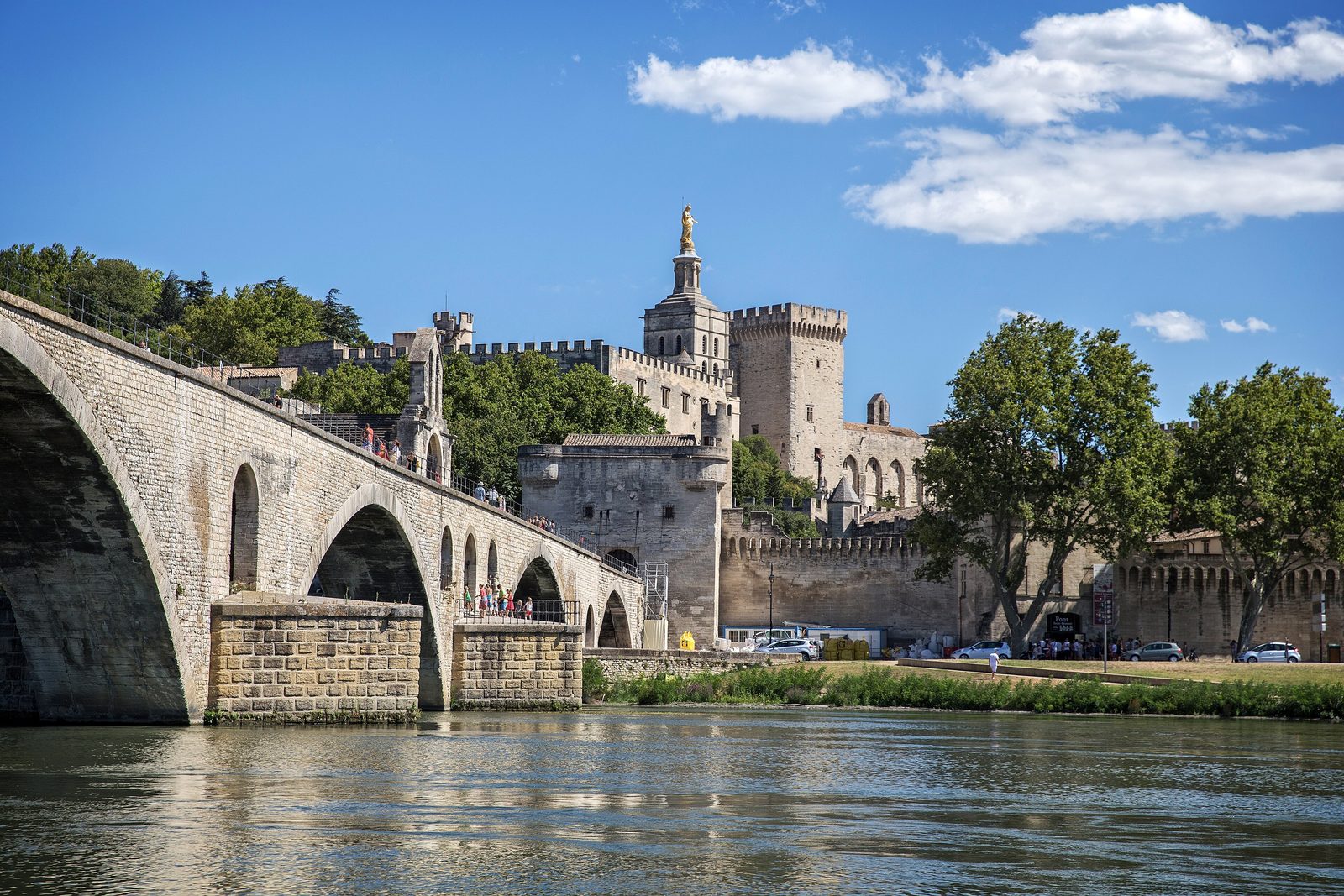
Why this orderTake a morning high-speed train south so the afternoon is yours. Avignon's sights sit close together at the top of the old town: the Palace of the Popes first, then the Petit Palais museum across the square, then up into the Rocher des Doms garden on the rock above the Rhône. Finish on the Pont d'Avignon, the broken medieval bridge you have just been looking down on.
Getting aroundHigh-speed train from Paris Gare de Lyon to Avignon TGV, then the regional shuttle train to Avignon Centre, by the city walls; a few trains from Paris run to Avignon Centre directly. Everything after that is on foot.
The largest Gothic palace in the world, home of the popes in the 14th century. The visit ends on its terraces, with a view over the courtyard, the town and the Rhône.
The former archbishops' palace on the same square, now holding Italian paintings from the 13th century to the Renaissance, including a Botticelli Madonna. The permanent collection is free.
A free public garden on the rock above the palace, looking over the Rhône and the bridge. Part of it is closed for restoration works until mid-2027, so check what is open.
The medieval bridge of the song, which now stops halfway across the river: only four of its original twenty-two arches remain, with a small chapel on one of them. Walk out to the end over the water.
If it rains: Trade the Rocher des Doms garden for the Musée Angladon, a private collection in an old town mansion that holds the only Van Gogh painting on permanent public display in Provence.
Why this orderThe Pont du Gard and its museum take the morning, so take an early bus out of Avignon. Walk across beside the lower tier and along the river, then continue by bus to Nîmes, the city the aqueduct was built to supply. Start in the Jardins de la Fontaine, on the ancient spring, walk down to the Maison Carrée temple, and end at the arena, about a quarter of an hour on foot from Nîmes Centre station and your train back to Avignon.
Getting aroundliO bus line 115 from the Avignon bus station, next to Avignon Centre, to the Rond-Point Pont du Gard stop, then a walk to the site. liO line 121 runs from the same stop to the Nîmes bus station. In Nîmes it is all on foot, and regional trains run back to Avignon from Nîmes Centre (not Nîmes-Pont-du-Gard, an out-of-town station).
The three-tiered Roman aqueduct bridge over the Gardon, built in the 1st century to carry water to Nîmes. Cross the river on the old road bridge built against its lower tier, and leave time for the museum on site.
One of the first public gardens in Europe, laid out from 1745 around the ancient spring, with the ruined Temple of Diana and the Roman Tour Magne in its grounds. The garden is free; the tower has a ticket.
One of the best-preserved Roman temples anywhere, on a square in the centre of Nîmes, and a World Heritage Site since 2023. Walk around all four sides before deciding whether to go in.
A Roman amphitheatre from around the end of the 1st century, among the best preserved anywhere, and still used for festivals and concerts.
If it rains: Trade the garden for the Musée de la Romanité, the museum of Roman Nîmes facing the arena.
Why this orderMost visits start at the arena; this one starts at the other end of town. Begin at LUMA Arles, the arts campus with its tower of folded steel, then walk to Les Alyscamps, the Roman cemetery Van Gogh painted. From there head into the old centre for the amphitheatre, and end at Saint-Trophime and its cloister on the main square.
Getting aroundRegional train from Avignon Centre to Arles. In Arles everything is on foot.
An arts campus in the Parc des Ateliers, opened in 2021 around a tower designed by Frank Gehry. The tower and the permanent works are free; only the exhibitions need a ticket.
An avenue lined with stone tombs, all that remains of a Roman and early Christian burial ground. Van Gogh and Gauguin painted it side by side in 1888.
Arles's Roman arena, built around the end of the 1st century, in the middle of the old town and part of its World Heritage listing.
A Romanesque former cathedral with a celebrated carved portal and cloister. The church is on the main square; the cloister has its own ticket.
If it rains: Trade Les Alyscamps for the Fondation Vincent van Gogh Arles, a contemporary art centre built around his legacy, whose exhibitions often include his paintings on loan.
Why this orderTake the regional bus from Avignon and walk out of town first, to the monastery where Van Gogh stayed and painted, then on to the Roman monuments and the ruined town of Glanum just beyond it. Walk back into the old town in the afternoon, when the lanes are at their best for a slow wander and a drink.
Getting aroundZou! bus line 707 from the Avignon bus station to Saint-Rémy. From the town centre, Saint-Paul de Mausole and Glanum are a walk of under half an hour, slightly uphill.
The monastery where Van Gogh lived for a year from 1889 and painted more than a hundred works. Still a hospital, with a visitable section, a Romanesque cloister and gardens.
A Roman mausoleum and arch standing by the road, opposite the entrance to Glanum. Free to see, and remarkably complete.
The excavated remains of a town that grew from a Gallic settlement under Greek influence into a Roman city. Walk its streets among the ruins.
The church on the boulevard that rings the old town, known for its grand organ. Free to enter, and the natural starting point for a wander through the lanes.
If it rains: Trade Glanum for the Musée Estrine, an art museum in an 18th-century town house with a Van Gogh interpretation centre.
Why this orderEnd the week with a short, calm morning across the river from Avignon, then head home. Start at the Tour Philippe-le-Bel, which once guarded the far end of the bridge, walk up to the Chartreuse, a monastery founded by a pope, then climb to Fort Saint-André and its abbey gardens for the last view back over Avignon and the palace.
Getting aroundOrizo bus line 5 across the Rhône from Avignon. On foot in Villeneuve, uphill to the fort. Back in Avignon, the shuttle train runs to Avignon TGV for the train north.
The medieval tower that guarded the French end of the Pont d'Avignon. Climb to its upper terrace for a view across the Rhône to the papal palace.
A charterhouse founded in 1356 by Pope Innocent VI, across the river from the palace he lived in.
A 14th-century fortress on Mont Andaon above the town. From the top of its towers the view takes in Avignon and the papal palace.
Terraced gardens in the Tuscan Renaissance style inside the fort's walls, privately owned, with their own ticket. A gentle last stop.
If it rains: Trade the fort and its gardens for the Musée Pierre-de-Luxembourg in the town centre, home of Enguerrand Quarton's Coronation of the Virgin, painted for the Chartreuse.
They change by place and season, and several museums and monuments close one day a week. Check each place before you go, and book a time slot wherever one is offered.
In Paris: the Louvre (required for everyone), the Palais Garnier visit (online only), Sainte-Chapelle (time slots), the Musée d'Orsay (time slot strongly advised while its entrance is renovated), and the Eiffel Tower if you want the summit. Book the high-speed train south early.
The Paris Museum Pass covers Paris and its region only, not Provence. In Avignon, the Avignon City Pass covers monuments and museums in Avignon and Villeneuve-lès-Avignon, including the Palace of the Popes, the Pont d'Avignon and Fort Saint-André.
Paper tickets have been phased out: load single Metro-Train-RER tickets onto a Navigo Easy card or a phone.
Avignon is the hub. Regional trains from Avignon Centre run to Arles and Nîmes; buses from the bus station next to it reach the Pont du Gard (liO 115) and Saint-Rémy (Zou! 707), and a town bus (Orizo 5) crosses to Villeneuve-lès-Avignon. Check the bus timetables the night before.
Two bases: central Paris for Days 1–2, and Avignon inside the walls for Days 3–7, near the train station and the bus station.
Enough for Paris and one region, if you keep to two bases. Trying to add the Riviera or the Loire in the same week turns it into a week of trains.
Because the south needs more time than its distances suggest: each Provence day here is one town or site, reached by train or bus. If Paris matters more to you, give it a third day and drop Day 7.
Not for this route. Avignon, Arles and Nîmes are linked by regional trains, and buses reach the Pont du Gard, Saint-Rémy and Villeneuve. A car helps only for the hill villages of the Luberon, which this plan leaves out.
It flowers from mid-June to early August, depending on the year and the altitude, and the fields lie away from the rail lines, so they are usually visited by car or on a tour from Avignon. This plan does not depend on them.
It is the rail and bus hub for everything on this route, and staying put means you unpack once.
Place names from Google Maps.
Copy this plan into your own trip notebook. Change anything, add dates later, and invite the people you are travelling with.
Use this plan
By continuing, you agree to the Terms of Service and acknowledge the Privacy Policy.